Rebar in Concrete: When, Where, and How Much

Why Reinforce Concrete
Concrete is incredibly strong in compression but weak in tension. It can support enormous weight pressing down on it but cracks and fails when forces pull it apart. Steel rebar (reinforcing bar) compensates for this weakness by absorbing tensile forces that would otherwise crack the concrete. The combination of concrete and steel creates a composite material that handles both compression and tension effectively.
Not every concrete project needs rebar. A 4-inch patio slab in a mild climate with good soil might do fine with just wire mesh or even no reinforcement at all. But any slab that carries significant loads, spans over unstable soil, or is in a freeze-thaw climate benefits from rebar. Use our Rebar Calculator to determine the right quantity and estimate weight.
Rebar Sizing
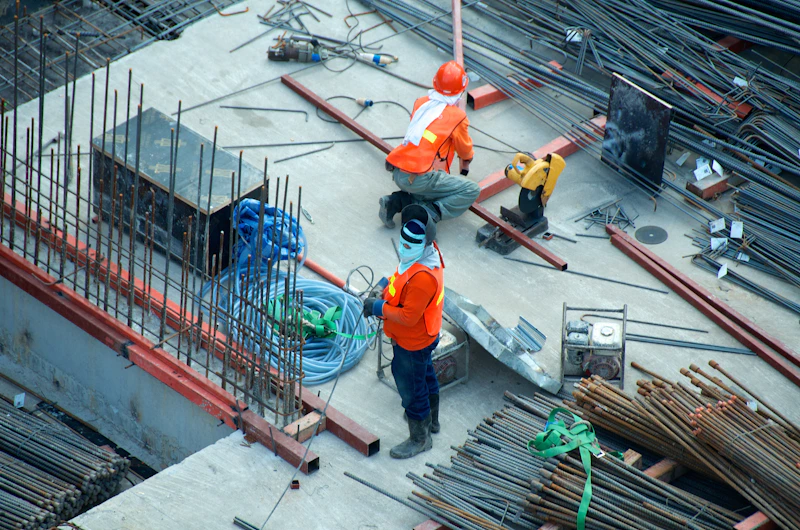
Rebar comes in standard sizes designated by numbers that roughly correspond to its diameter in eighths of an inch. #3 bar is 3/8 inch (9.5mm) diameter, #4 is 1/2 inch (12.7mm), and so on. For residential slabs, #3 and #4 are the most common. #4 is typically used for driveway slabs, garage floors, and footings. #3 works for sidewalks and patios. Larger bars (#5 through #9) are used in footings, columns, and structural elements.
The size you need depends on the span, load, and slab thickness. As a general rule, use #4 bars at 18-inch spacing for a 5-6 inch driveway slab, or #3 bars at 16-inch spacing for a 4-inch patio slab. For structural applications, follow the engineer or building code specifications exactly.
Spacing and Placement
Rebar should be placed in the lower third of the slab for ground-supported slabs, where tensile forces are greatest. Support the rebar on chairs or plastic dobies to keep it at the correct height during the pour. If rebar sits on the ground, it provides no reinforcement value because it is at the neutral axis of the slab rather than in the tension zone.
Minimum lap (overlap) length for splicing rebar is typically 40 times the bar diameter. For #4 bar, that is 20 inches. In seismic zones, lap requirements are more stringent. All laps should be staggered, not all at the same location, to maintain structural integrity. Bend rebar at corners rather than terminating it, and maintain at least 2 inches of concrete cover (distance from bar to surface) for ground contact and 1.5 inches for interior exposure.

Wire Mesh vs. Rebar
Welded wire mesh (WWF) is a grid of welded steel wires that provides reinforcement across an entire slab. It is easier to handle and install than rebar but provides less reinforcement at any single point. For light-duty residential slabs in good soil conditions, wire mesh may be sufficient. For heavy loads, expansive soils, or critical structural applications, rebar is the better choice.
In practice, many contractors use both: rebar in the primary stress directions (typically two directions in a grid) and wire mesh as secondary reinforcement. This combination provides excellent crack control and structural capacity. For a detailed estimate of both rebar quantities and concrete volume, use our Concrete Slab Cost Estimator.